GPU Hardware's Reliability Problem Is Now Everywhere
Article

GPU Hardware's Reliability Problem Is Now Everywhere

Three recent incidents on the GPU and AI hardware beat share one thread: the failures are moving from the silicon to the connectors, the drivers, and the power around it.

SuryaNovember 9, 20264 min read

Photo: Tom's Hardware

The defining reliability problem in GPUs and AI hardware has migrated away from the chip itself. In the space of recent weeks, the logged trouble on this beat has come from a power connector, a driver writing to an SSD, and the local backlash to a data center build. In each case the silicon works as advertised while the layers built around it fail or draw resistance. That is the thread worth naming, because it changes who carries the risk and who pays for it.

Power Delivery Remains the Weak Point

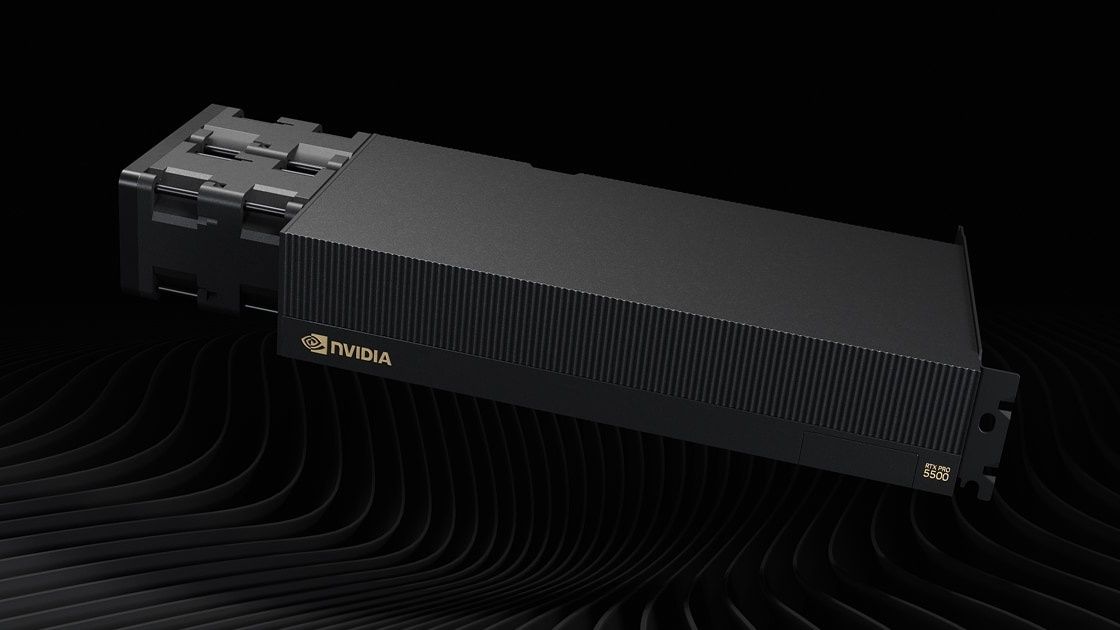
The clearest example is the power connector. As Tom's Hardware reported, a user running two RTX PRO 6000 Blackwell Workstation GPUs found cables that had nearly melted, and the owner spotted the damage before it reached the GPU connectors themselves. The detail that matters is the power limit: the cards were capped at 500W, not run at some extreme setting. The 12V-2x6 connector nearly took out two professional workstation GPUs under restrained conditions.

This matters for the US market because these are not hobbyist parts. The RTX PRO 6000 class is what US studios, research labs, and enterprise buyers put into workstations for AI and rendering work, often in multi-GPU configurations. A connector that shows heat damage below the card's ceiling pushes the burden onto buyers to inspect cabling and onto system integrators to test configurations the vendor has not normalized. Every procurement cycle that adds a cable inspection step is cost and delay borne by the customer.

Drivers as a Wear Mechanism

The second failure mode is software quietly consuming hardware. As Tom's Hardware reported, AMD is investigating reports that its External Events Utility generates continuous SSD writes of up to 5MB/s even when Radeon-powered PCs sit idle, and users have reported declining SSD health. Workarounds exist, but they come with performance trade-offs.

This is a different class of defect from a crash. A crash is visible and gets fixed. A driver that writes continuously in the background degrades a component the user did not think was in play, and it does so slowly enough that the connection is easy to miss. For US consumers and small businesses running Radeon systems, the practical exposure is an SSD that ages faster than expected, with the remedy being either a workaround that costs performance or a wait for a fix. Neither is a satisfying answer for someone who bought a GPU and now has to think about their storage.

Both stories point the same direction: the peripheral systems around the GPU, the connector and the driver, are where reliability is being decided. The compute is not the headline.

The Data Center Meets the Same Friction

The third story looks unrelated but is not. As Wired reported, bikers and bug-lovers have joined forces to fight a new Google data center, part of protests breaking out across Europe, with a mismatched band of campaigners trying to block a sprawling facility east of London.

It would be easy to file this under politics. On this beat it belongs under siting risk. AI hardware does not exist as a card in a box; it exists as racks drawing power in a building that has to be permitted, built, and accepted locally. When a company as large as Google meets organized opposition over a facility, the constraint is not the GPU supply chain but the ability to place the hardware where it can run. That risk lands on the US companies building the infrastructure, because siting friction abroad shapes where capacity gets built and how quickly. It also lands on US buyers of AI capacity, who ultimately absorb the cost of delay.

Why This Pattern Is Specific to This Beat

It would be a mistake to read these three as generic tech messiness. The common factor is density. GPUs and AI hardware push more power through smaller connectors, run more background software on the host, and concentrate more compute into fewer, larger facilities than the hardware this market replaced. Each of those choices raises the stakes on the parts that are not the chip.

That has a direct consequence for US technology companies. The margin and the reputation now sit with the connector supplier, the driver team, and the real estate and permitting group, not only with the chip designers. A company that ships excellent silicon and a marginal connector, or excellent silicon and a driver that grinds an SSD, has shipped a product that generates support tickets and returns. In a market where AI hardware buyers are already paying premiums, tolerance for that is thin.

What to Watch

The concrete signals are all in the material above. On power, watch whether the 12V-2x6 connector issue on the RTX PRO 6000 Blackwell Workstation GPUs, as Tom's Hardware described, produces guidance for multi-GPU workstation buyers or is treated as an isolated user report. On software, watch the outcome of AMD's investigation into the External Events Utility and whether the workarounds, with their performance trade-offs, remain the recommended path. On siting, watch whether the opposition to Google's planned facility east of London, as Wired reported, spreads to other European builds, since that determines how quickly AI hardware can be placed where it is needed.

The through-line to hold onto is simple. In this beat, the chip is increasingly the part that works. The failures are in the power, the software, and the ground it stands on, and those are the areas where US buyers and US builders now carry the risk.

More on this beat: Hardware on TechManNews.

#GPUs#AI hardware#power delivery#reliability#data centers#drivers

Newsletter

Get Tech News in Your Inbox

The latest AI, gadgets, software and startup stories from TechManNews, delivered every morning - free.