The Silicon Supply Chain Is Turning Inward
Article

The Silicon Supply Chain Is Turning Inward

Four recent hardware stories point to a common pattern: companies are rebuilding the chip-to-device stack around vertical integration and domestic control.

ManishankarNovember 10, 20264 min read

Photo: Engadget

The four stories on this desk share a single thread: the hardware industry is reorganizing around control of the full stack, from wafer fabrication to the device in a customer's hands. Each story describes a company extending its reach into a layer it previously bought, outsourced, or left to partners. The pattern matters for US technology companies and consumers because it shifts where costs, bottlenecks, and competitive advantage accumulate.

Tesla's Terafab Is a Vertical Integration Story

Tom's Hardware reports that Elon Musk's Terafab, a Tesla and SpaceX venture, targets one million wafers per month after 2032, with roughly 700,000 of those wafers earmarked for memory. The detail that matters is not the volume but the buyer: a carmaker and a rocket company proposing to fabricate its own silicon at scale. Memory has historically been a purchased commodity, sourced from a handful of large manufacturers. A terafab of this size would move Tesla and SpaceX from customers to producers, converting a supply-chain dependency into an internal capability. That is the same logic that drove Tesla to design its own automotive chips, extended further upstream. For US companies that buy memory rather than make it, the strategic question becomes whether a single vertically integrated buyer of this scale changes the merchant market's dynamics, or whether it mostly insulates one company from them.

AMD's Embedded Push Shows the Same Logic From the Supply Side

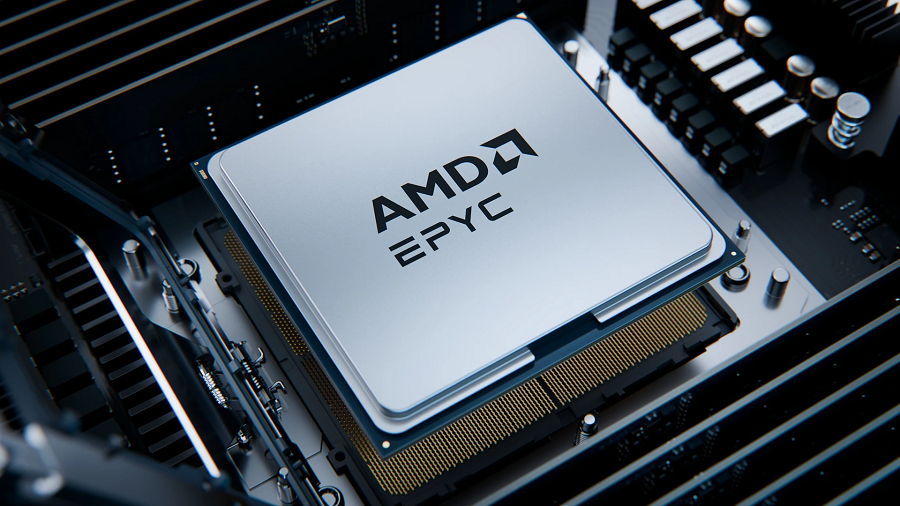
SiliconANGLE reports that AMD launched its 6th Gen EPYC Embedded 9006 Series SP7 processors, bringing Zen 6 architecture to embedded systems used to validate semiconductor technologies, including automated test equipment and enterprise storage. AMD is not vertically integrating into a new end market so much as pushing a proven architecture deeper into the tooling that other chipmakers depend on. The embedded segment is where AMD sells into the equipment layer of the semiconductor supply chain, the same layer that companies like Tesla would need to populate if they build their own fabs. Both stories describe the semiconductor stack being pushed from both ends: a buyer moving upstream into fabrication, and a supplier moving downstream into the test and validation equipment that keeps fabrication running.

Starlink Mini 2 Puts the Whole Product in One Box

The Verge reports that SpaceX announced a new Starlink Mini 2 terminal that integrates a dish, a Wi-Fi router, and now a swappable battery into a single device about the size of a laptop. According to users on X who shared screenshots of ordering invitations, the dish is priced at $999. The integration is the point. Where a satellite internet setup once required separate hardware for reception, routing, and power, SpaceX has collapsed those layers into one product. The swappable battery in particular addresses the power dependency that previously required a separate accessory or an external power source. For US consumers, that is a meaningful change in what a satellite internet terminal is: a single purchase rather than a bundle of parts. For competitors, it raises the bar on integration.

Polestar's Concept Shows Design Control Surviving Even When Market Access Does Not

Engadget reports that Polestar is banned in the US, yet its Formula 2030 concept car still draws attention, with inflatable seats, a pop-up LiDAR sensor, and physical buttons. The story is a reminder that vertical integration is not only about manufacturing. The concept car shows a company retaining control over design decisions, including the sensor architecture and the choice to keep physical controls, even when it cannot sell in the largest market. That is a different kind of stack control: the ability to specify and integrate components like LiDAR into a vehicle rather than sourcing a finished system. It also illustrates the cost of losing market access. A company that controls its design but not its distribution has an incomplete stack, and the US market loses a competitor in the process.

What the Pattern Means for the US

Taken together, the stories describe a hardware economy where the advantage goes to companies that own more of the chain. Tesla and SpaceX are moving into wafer fabrication, per Tom's Hardware. SpaceX is collapsing terminal hardware into a single integrated product, per The Verge. AMD is pushing its architecture into the embedded test equipment that underpins chipmaking, per SiliconANGLE. Polestar is designing integrated vehicle systems while locked out of the US market, per Engadget. For US technology companies, the competitive pressure is to control more layers, because a company that buys its memory, its terminals, or its test equipment is exposed to whatever those suppliers decide. For US consumers, the near-term effect is more integrated products, like a single Starlink terminal with a battery, and potentially fewer choices, as market access and capital requirements favor the largest integrated players. The Polestar case is the cautionary version: design control without distribution control does not translate into a US presence.

What to Watch

The timelines in these stories are long and specific. Terafab's one-million-wafer target is set for after 2032, so the near-term question is whether the venture moves through intermediate milestones that suggest the plan is real rather than aspirational. Starlink Mini 2's $999 price, as reported by The Verge from ordering screenshots, will show whether integrated terminals become the default or remain a premium option. AMD's embedded launch will be measured by whether Zen 6 in test and validation equipment becomes a standard reference for the semiconductor tooling industry. And Polestar's US status is worth tracking, because a design-forward company remaining outside the market is itself a data point about how US access rules shape which integrated products Americans can buy.

More on this beat: Hardware on TechManNews.

#semiconductors#vertical integration#supply chain#hardware#SpaceX#AMD

Newsletter

Get Tech News in Your Inbox

The latest AI, gadgets, software and startup stories from TechManNews, delivered every morning - free.