The three laptop stories logged on this beat recently look unrelated at first: a review of Apple's M6 MacBook Pro, a warning about webcam covers, and an explanation of why laptops run hot. Read together, they describe a single pattern. The modern laptop is designed around thinness, sealed construction and a fixed feature hierarchy, and that design logic keeps producing small, predictable frictions for the people who buy and use the machines.
The Baseline Model Gets the Leftovers
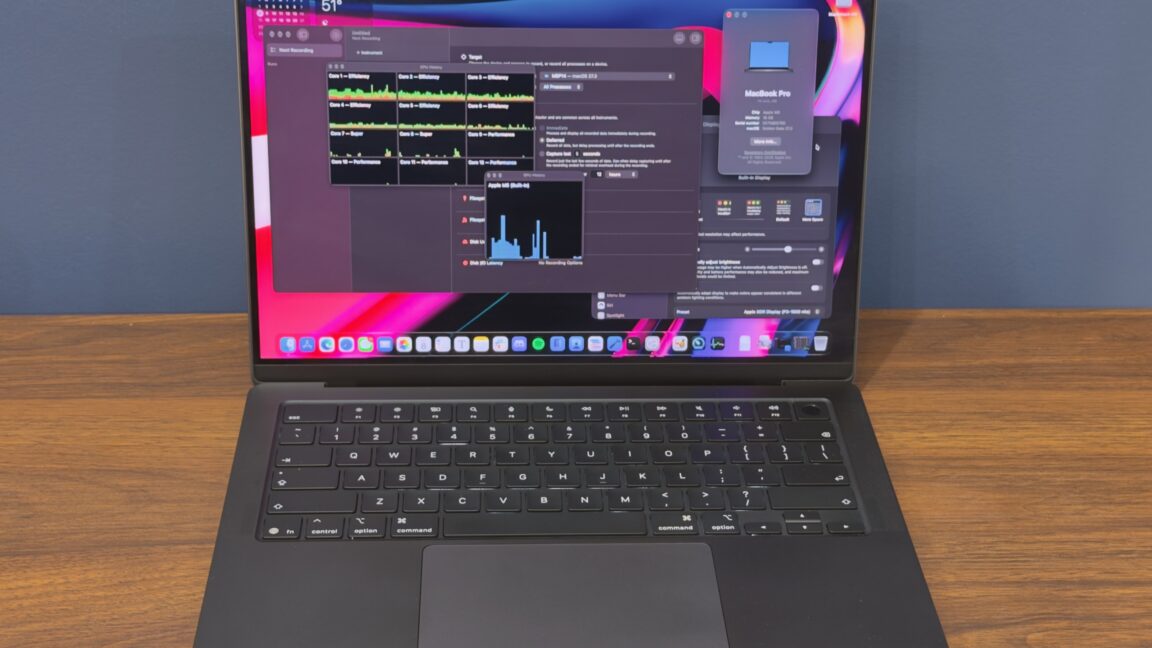
Ars Technica's review of Apple's M6 MacBook Pro lands on a familiar conclusion: the basic MacBook Pro is good, but it is missing all the exciting stuff, and it lags behind the flagships where it counts. That is not a defect so much as a strategy. Apple's lineup has for years reserved its most notable improvements for the higher-priced configurations, leaving the entry model as a competent machine defined partly by what it does not include. For US buyers, the practical consequence is that the model most people can actually afford is the one where the interesting engineering is deliberately absent. The review's framing matters because it treats the gap as the norm rather than a surprise, which is itself evidence of how settled this arrangement has become.
Thin Enclosures, No Margin for Error
Engadget's piece on webcam covers makes the same point from a different angle. A webcam cover sounds like a sensible privacy measure, but the publication notes that the MacBook is not designed with space to accommodate one. The clearance between screen and keyboard simply is not there, and adding a physical slider introduces pressure where the design assumed none. This is a design choice with a direct consumer cost: a cheap accessory meant to protect privacy can instead damage a display. The pattern is not that Apple is uniquely careless. It is that the pursuit of a thin, tightly toleranced enclosure removes the slack that would let users add small safeguards of their own. In a sealed, minimal design, every millimetre is spoken for.
Heat Is a Symptom, Not a Mystery
Engadget's explanation of why laptops get hot after extended use rounds out the picture. The publication notes that some heat buildup is normal, while excessive temperature spikes can be reduced in a few ways. The key word is excessive. Laptop thermal design is another place where thinness and quiet operation compete with sustained performance, and the resulting compromises show up as heat under load. The remedies Engadget describes are about managing use rather than repairing a fault, which tells you where the burden lands. When a machine has limited thermal headroom, the user is the one who adjusts: where it sits, what it rests on, how long it runs at full tilt. That is a reasonable arrangement in many cases, but it is still a cost shifted onto the buyer.