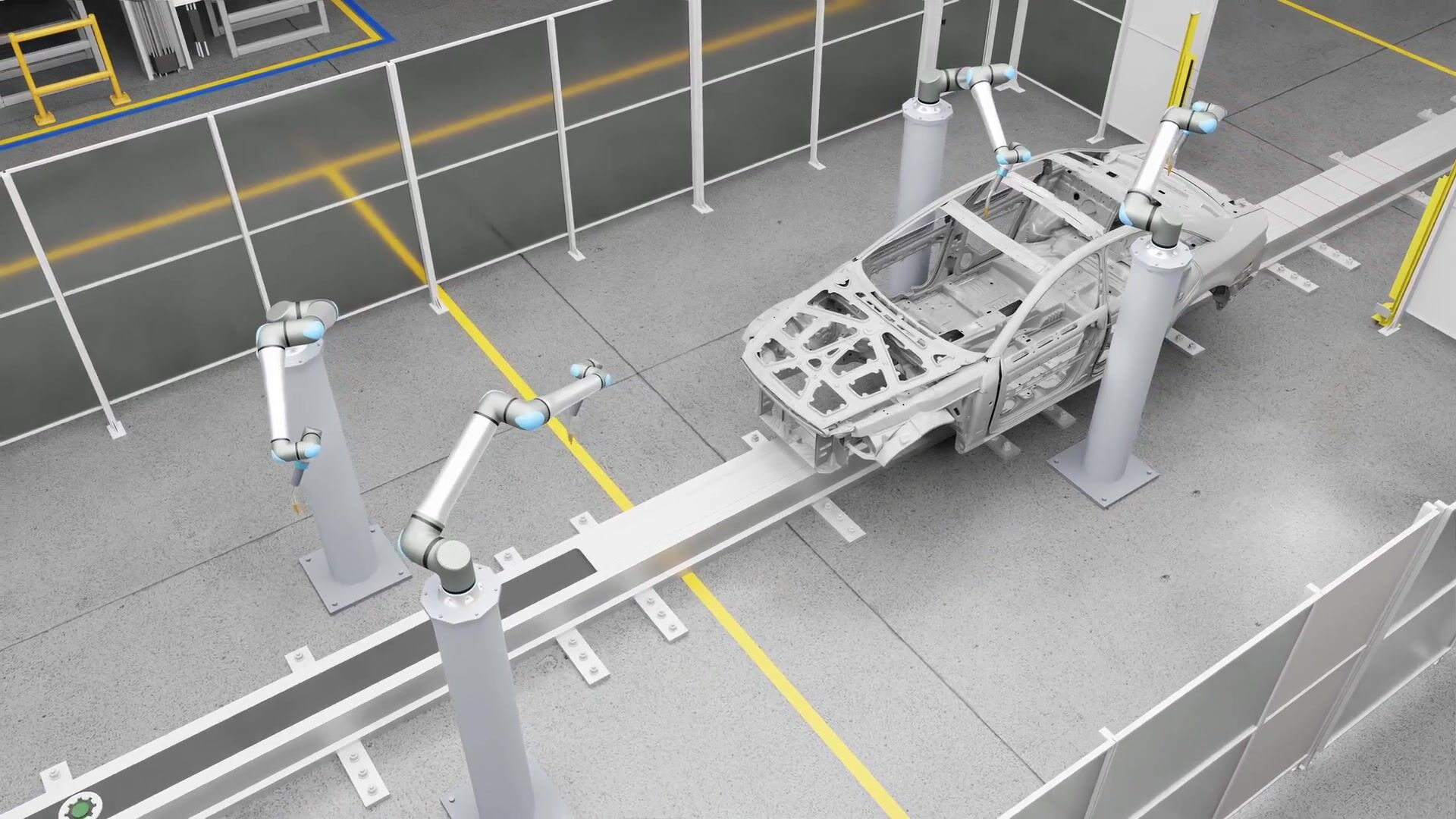
Antioch Inc., a startup developing simulation software for robotics and autonomous systems, announced $32 million in new funding on Tuesday. The capital will support product development, engineering hires, and deeper simulation capabilities for the company’s customers in robotics, autonomy, and perception teams. The company is targeting the current testing model for autonomous machines, where every change to a robot, drone, or industrial machine must be proven on physical equipment at significant hardware and engineering cost.
Antioch’s software calibrates a simulation to a customer’s specific hardware and then runs it on cloud infrastructure. This approach allows a team that could previously afford a single physical experiment to run thousands of simulated evaluations in parallel. Co-founder Harry Mellsop said that bringing autonomous systems into the real world requires a testing approach built on high-fidelity simulation to support faster, safer, and more reliable deployment.
The company counts Amazon.com Inc. among its users. Jason Mitura, vice president of software development at Amazon and chief product officer at its Ring unit, said Antioch’s simulations have closely matched physical test results, including scenarios deliberately held out of calibration. He added that the software enables a level of confidence in simulation that was not previously possible for validating complex systems.
Antioch has also established partnerships with Nvidia Corp. and Nebius Group N.V. Nvidia’s open physical artificial intelligence stack, including Omniverse libraries and the Isaac Sim and Isaac Lab robotics frameworks, is being integrated into Antioch’s platform to help developers spread testing across thousands of simulated scenarios. Nebius is supplying cloud infrastructure. Evan Helda, head of physical AI at Nebius, said simulation is one of the hardest parts of the stack to get right.
Saam Motamedi, a general partner at Greylock, said physical AI and robotics are reaching a key inflection point, and that Antioch is building the core development platform for the next phase of the market. Greylock’s involvement is part of a broader funding history for the startup. Antioch previously raised a $4.25 million pre-seed round in December and an $8.5 million round in April, bringing total backing from investors to $44.75 million with the new announcement.
The new funding arrives as US-based robotics and autonomy developers face growing pressure to cut physical testing costs while improving safety and reliability. Antioch’s focus on simulation as a validation tool speaks to that shift, offering a path for engineers to move more testing into the cloud. The company’s partnerships with major chip and cloud providers position it within a broader industry push toward physical AI infrastructure.
More company and startup news from TechManNews.