Washington's Chip Rules Are Getting Harder to Fit to Reality

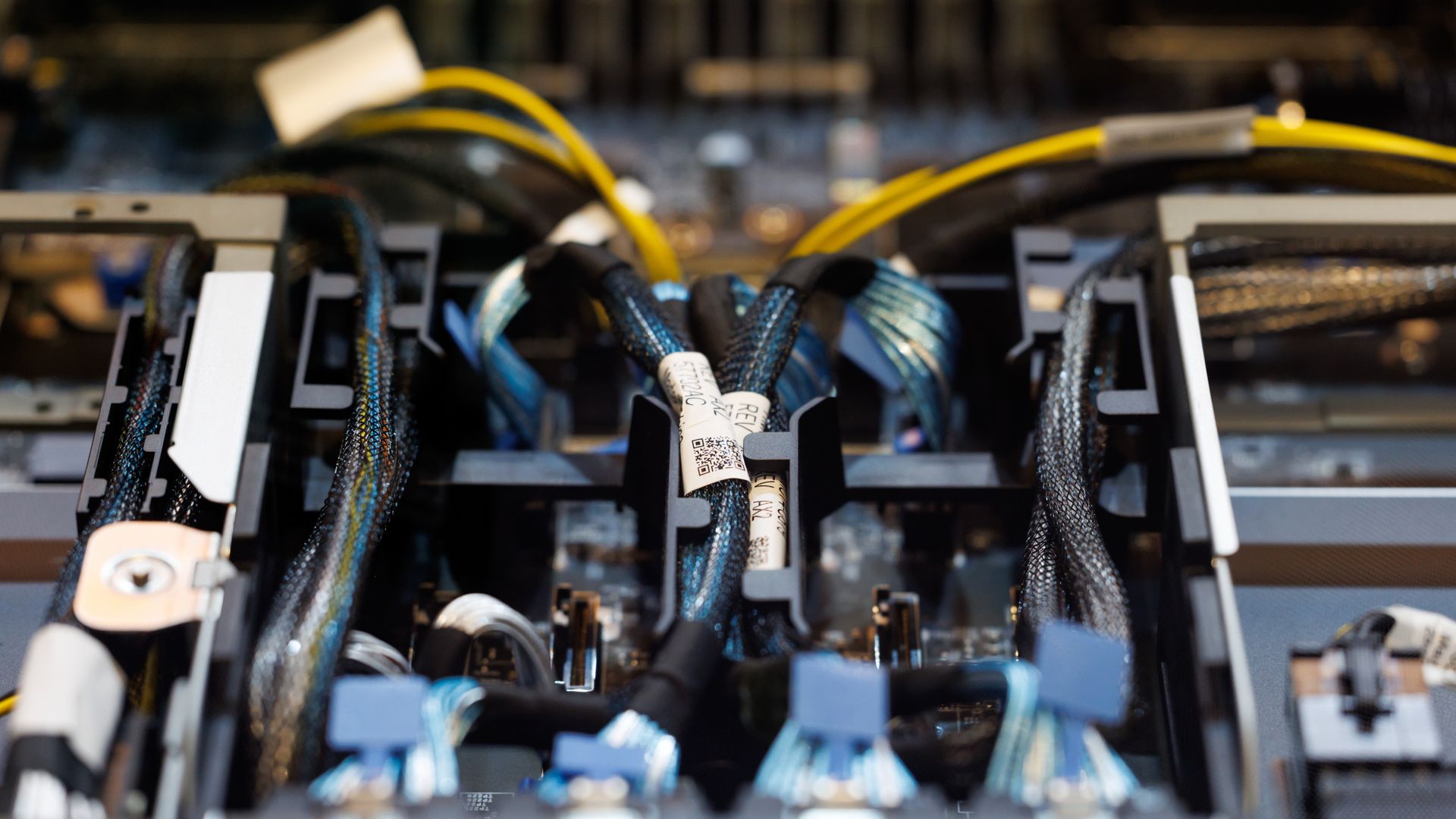
Photo: Ars Technica

Article

Washington's Chip Rules Are Getting Harder to Fit to Reality

SuryaOctober 24, 20264 min read

Three enforcement stories show US chip controls straining against supply chains, installed hardware and definitions that no longer match how chips actually move.

Three stories logged on this beat this week look unrelated at first glance: a waiver for Intel over foreign-made robots, black-market Nvidia Blackwell Ultra B300 chips found inside a Chinese state carrier's network, and the FCC's first bans under its chip-level rule. The thread connecting them is that US chip controls are increasingly colliding with physical reality. The rules are written around categories, paperwork and border crossings, while the technology they target lives in factory floors, already-installed equipment and components whose provenance is often unclear even to the people running them.

Intel's Waiver Shows the Rules Biting the Home Team

As Ars Technica reported, Intel has received a waiver after worries that a fuzzy US ban on foreign-made robots might hit its fabs. The company says foreign-made robotic vehicles are crucial to US chip production. The details matter less than the shape of the problem. A restriction aimed at foreign automation technology threatened to catch the machines that move wafers around inside American fabrication plants, which is to say the restriction threatened the very production capacity it was meant to protect.

The waiver is a sensible fix, but it is also an admission. US chip policy now covers so much industrial ground that the government has to carve out exceptions for its own flagship manufacturer, and it has to do so case by case. That is not a stable way to run a supply chain. For US equipment suppliers and fab operators, the practical lesson is that compliance risk now attaches to ordinary capital equipment, not just to the leading-edge chips themselves. Firms planning expansions have to budget for regulatory uncertainty alongside construction costs.

Installed Chips Don't Respect Borders

Tom's Hardware reported that a security firm identified 32 Nvidia Blackwell Ultra B300 AI chips running inside a China Telecom network, though it is unclear where the export-barred components are physically located. That last clause is the important one. The chips were detectable because they were doing work on a network, not because anyone saw them cross a border. Enforcement here happened after installation, at the point of use, and even then could not establish location.

This is a structural change in what export control means. For decades, chip controls were about denying a buyer access to new hardware. Now the hardware is already deployed, and the question becomes whether anyone can find it, attribute it and reach it. The answer, on the evidence of this single case, is partial at best. Thirty-two chips is a small number against the scale of Chinese AI infrastructure, but the method matters more than the count. Detection through network behavior suggests a future in which compliance is measured by what chips are seen doing rather than by what paperwork accompanied their shipment.

For US cloud providers and AI companies, the implications are uncomfortable. If barred parts can run undetected inside a foreign carrier's network, then the enforcement regime is porous, and firms that spent heavily on compliance are competing against an installed base that did not. It also raises the question of how US firms should treat foreign network partners whose hardware inventory cannot be verified.


The FCC Tests a New Enforcement Edge

As Tom's Hardware reported, the FCC issued its first bans under a new chip-level rule, blocking a dashcam and a wireless video transmitter made by HiSilicon, a Huawei subsidiary, because they contain an AI chip that advertises face detection algorithms. This is a different mechanism from export control. It is a market-access ban on finished products, justified at the level of the silicon inside them.

The shift matters for US technology companies because it extends chip policy into consumer and commercial hardware far from data centers. A component that never appeared on an export license now determines whether an entire product can be sold in the United States. Equipment makers sourcing chips from Chinese vendors face a new layer of due diligence, and the burden falls hardest on firms without the legal staff to track component-level restrictions across product lines.

Three Regimes, One Blurry Line

What the three stories share is a widening gap between how controls are written and how chips behave. Intel's waiver arises because a robot ban could not cleanly distinguish a wafer-handling vehicle from a prohibited foreign system. The China Telecom case arises because an export ban cannot follow a chip once it is installed. The FCC action arises because a chip-level rule turns any product containing a covered component into a regulated item, whether or not the product is the point.

Each measure was defensible on its own terms. Taken together, they describe a regulatory apparatus being stretched to cover a technology that is embedded everywhere, moves invisibly and is increasingly defined by function rather than by shipment. The US market feels this in two ways. Domestic manufacturers face waivers, carve-outs and case-by-case uncertainty. Consumers face product bans justified by chips they will never see and cannot evaluate.

What to Watch

The next signals are concrete. Watch whether waivers like Intel's become routine, which would indicate the robot restriction is too broad for the fabs it is meant to shelter. Watch whether security firms publish further findings of export-barred accelerators running inside foreign networks, and whether those findings establish location as well as identity. Watch how many FCC actions follow the HiSilicon bans under the chip-level rule, and whether they reach components in products beyond dashcams and video transmitters. And watch whether US equipment makers and importers begin disclosing component-provenance risk in the way they now disclose supply constraints. Each of these will show whether Washington can keep writing rules that fit the hardware, or whether the hardware keeps outrunning the rules.

More on this beat: Hardware on TechManNews.

#export controls#semiconductors#Nvidia#Intel#FCC#supply chain

Newsletter

Get Tech News in Your Inbox

The latest AI, gadgets, software and startup stories from TechManNews, delivered every morning - free.